
Achieving product-market fit is essential for building a successful SaaS company. But it’s not a one-time milestone you reach and move on from. In today’s competitive landscape, finding product-market fit is an ongoing process that requires constant attention, adaptation, and iteration. What signals PMF for a B2B SaaS product may look very different from a consumer-facing app or enterprise platform, and founders need to recognize those differences early.
With the global SaaS market size in 2025 expected to reach over $400 billion, there’s never been more opportunity — or more competition — for software businesses. The companies that thrive are the ones that quickly match their product to strong market demand, then work to protect and expand it as market conditions change. Without that fit, you risk wasting resources and missing out on the revenue potential that comes from meeting strong market demand with the right solution.
Whether you’re bootstrapping or securing outside funding, achieving product-market fit early can accelerate growth, attract investors, and reduce risk.
In this guide, we’ll share proven product-market fit frameworks and examples to help you identify the right market, confirm you’ve reached the right level of PMF, and maintain it for long-term success.
What is product-market fit?
Product-market fit refers to when a product is being sold to a target market that demands this product and is willing to pay a sufficient price for the product so that the company can be profitable.
While the term “product-market fit” can be used in any industry, it’s most frequently used in the SaaS and tech world. SaaS product-market fit is challenging and the products are notoriously expensive to build. And because they help users achieve something, the target audience definitions can be more complex. For example, many SaaS companies sell to a certain role (such as the person in charge of accounting), rather than to a particular demographic (like middle-aged men).
How to find product-market fit when outsourcing development
Many non-technical founders will get an idea for a SaaS product, assume that the market will respond well to this idea, and then search for a software development agency to build it. Unless that agency takes a product-based approach and offers services for prototype creation, user testing, and prototype validation, then hiring them will backfire.
It is possible to find product-market fit when you outsource development, but you need to look for these key elements in the outsourcing partner you choose:
Offers a Design Sprint or similar service
Builds MVPs in 2 - 6 months
Includes a product manager trained in business strategy (not just a project manager)
Top methods for finding product-market fit
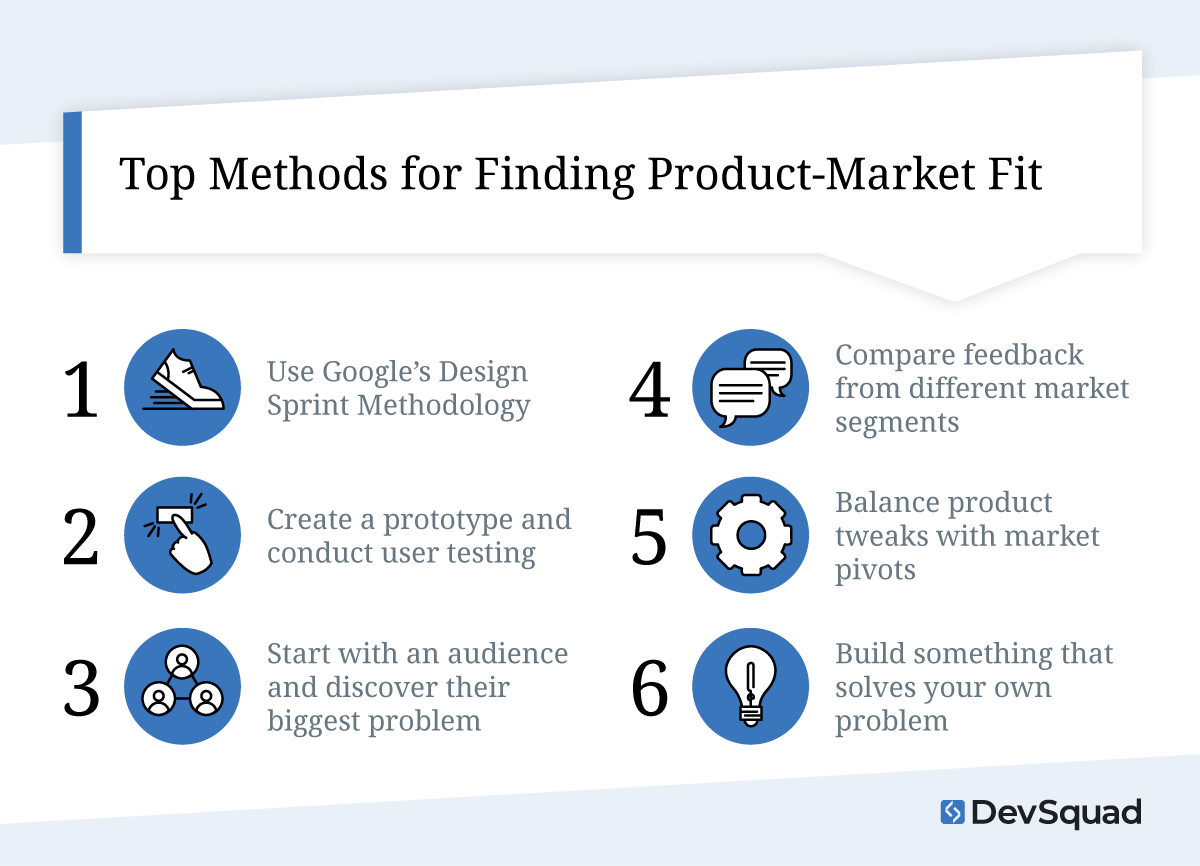
So how do you find product-market fit, exactly? Well there’s no single path to achieving product-market fit. The right approach depends on your value hypothesis, product stage, market, and goals. Whether you code an app from scratch, work with a technical co-founder, or hire an agency, it’s important to understand the methods available to you.
Some methods work best when you’re still in the early startup stages, while others are more effective once you’ve trying to stay on top. Also understanding where you are now will help you choose the most effective strategy, avoid wasting effort, and move faster toward strong market demand.
Google’s Design Sprint process
The Design Sprint Methodology breaks product strategy into unique phases:
Understand - Research the target audience and their problems by talking to them and conducting social listening.
Define - Clarify the biggest problem that needs to be solved.
Sketch - Map out different ways to solve this big problem.
Decide - As a team, choose which solution is the most viable (attacks the problem most directly, or is the easiest to build).
Prototype - Create a prototype of the chosen solution.
Validate - Show it to target users and get their feedback before deciding to move forward.
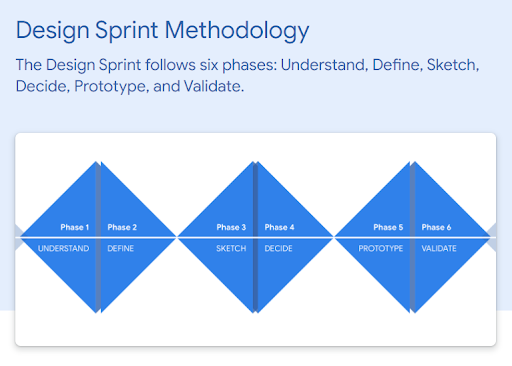
We’ll discuss some of these elements further in our other ideas below, but it’s worth noting that the Design Sprint Methodology is an end-to-end process for concept validation. However, the point is not just to create the right product, but find the right market too, so it’s important to note that if your product fails validation, it might be a market problem, not a product problem.
Prototype creation and testing
Regardless of whether you follow Google’s Design Sprint process exactly or not, you absolutely need to create and test a prototype of your product. Otherwise, you’ll have to build the actual software product before you get user feedback. Cost-wise, this represents a difference of tens of thousands of dollars.
At DevSquad, our Design Sprint service includes two iterations of a prototype. We create a high-fidelity prototype that looks and feels like the real final product, and users can click around on it (although the back end won’t be built out). You can conduct user testing, or we can run it for you.
Talking with potential customers about their important problems
When you’re talking with potential customers, you need to discover their biggest problems. You might start with one problem, but then realize that it’s not as important as you assumed.
Sometimes it’s smart to start with an audience, not a problem. Then you can discover the problem.
For example, business travel platform TravelPerk was founded by Avi Meir, a developer who previously worked at Booking.com. He knew that most business travel software was outdated, and decided to talk with travel managers and office managers at local startups in Barcelona about how they book travel.
He assumed that they would be interested in his concept of solving over-budget transactions by incentivizing travelers to stay within policy. But after talking with target customers in person, he found that the office managers were actually struggling with wrangling invoices. Employees were booking travel all over the place, and the office staff had to deal with the expense management, invoice collection, and reimbursement processing.

So instead of building a solution to incentivize business travelers to stay under budget, he and his team instead built a platform where business travelers can book travel for themselves, and the managers can control, pay for, and review everything.
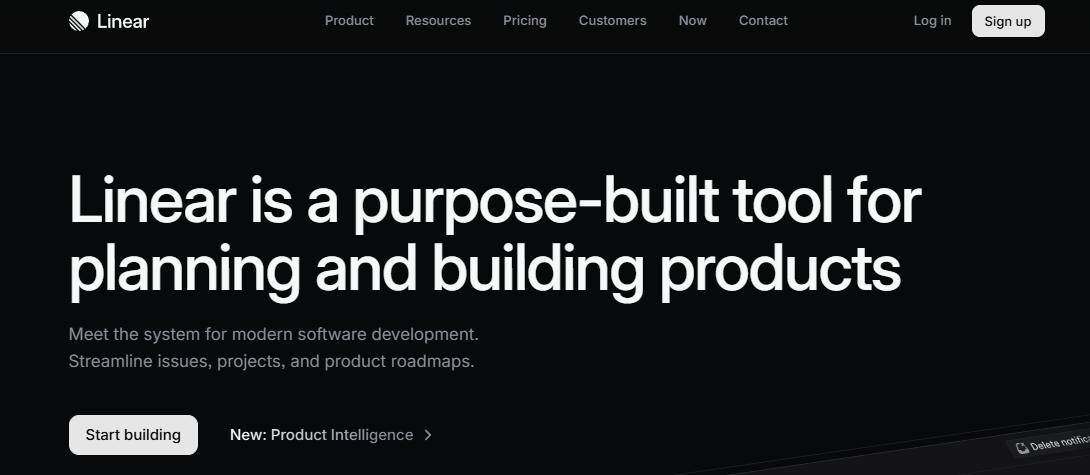
The founders of Linear took a similar approach in a completely different space. Before building their product management tool, they interviewed dozens of developers to uncover their biggest frustrations with existing solutions. Those conversations revealed a shared pain point: most tools felt slow, cluttered, and over-engineered. By zeroing in on that core complaint, they built a faster, more streamlined alternative that resonated immediately with their target audience.
Comparing feedback from different customer personas
If you have a product idea that could work for different personas, you should collect feedback from each group and analyze it separately. You might find that one segment is much more likely to pay a premium price for your product. If so, you should prioritize their feedback as you build, so you make sure to cater your product to the right market from the very beginning.
This can be true for not only different roles and industries, but company sizes as well. Let’s consider the TravelPerk example above. Had the co-founders spoken to very small businesses of 20 or fewer employees, they would not have found a problem worth solving. Those businesses can manage travel the manual way just fine. But by speaking with office managers of fast-growing startups, they were able to find a market that needed a solution before they even started building a product.
Airtable faced a similar situation in its early days. While creative teams loved the product’s flexibility for project tracking, enterprise users were more concerned with security, permission controls, and integration with existing systems. By segmenting feedback from these distinct personas, Airtable was able to prioritize features for the higher-value enterprise segment while still serving its enthusiastic creative user base. This balance helped them strengthen their product-market fit across different market tiers.
Balancing product tweaks and market pivots
Product-market fit isn’t just about building an amazing product, but getting it into the hands of the right people. As you go along, it’s important to balance the adjustments you make to your product and the adjustments you make to your market. There’s no general advice that can help you determine this balance. Just make sure that you keep an eye on both elements, and maintain a clear head. Don’t get fixated on either your product or your market. Instead, allow flexibility with both.
Building something that you personally need
Is there a SaaS product that you need? Are you 100% certain that other people like you need it too? One of our recent clients built BoosterHub to help school sports coaches and volunteers to manage every aspect of running a booster club, from contacts, to calendar, to collecting donations, to communication, to creating a website.
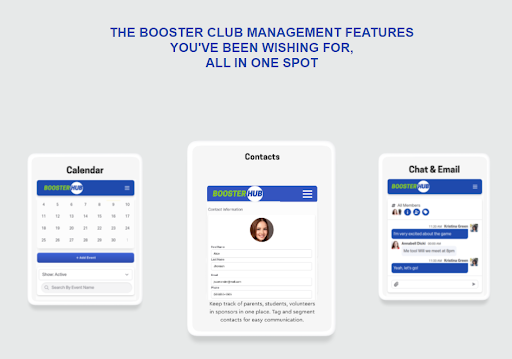
After volunteering for multiple clubs with her 3 kids, our client knew that running a booster club had not been digitized well, and knew that other parents at other schools struggled with it too.
How to measure product-market fit
Finding product-market fit is one thing, confirming you’ve actually achieved it is another. For SaaS founders, learning how to measure product-market fit means looking at a mix of quantitative data and qualitative insights that together paint a picture of how well your product resonates with the market. With product-market fit measured from multiple angles, you can see if you’re ready to scale, if you need to adjust, or if you’re still in the process of finding product-market fit.
The 40% rule
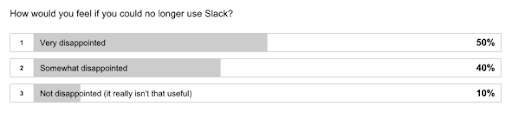
Sean Ellis, a growth leader during the early stages of Dropbox, Eventbrite, and LogMeIn, has a simple test for finding product-market fit. He says that if 40% of your users say that if your software was to disappear, they would be “very disappointed.” When you ask this question to your users, you’re supposed to offer three possible answers:
Very disappointed
Somewhat disappointed
Not disappointed
Hiten Shah conducted a product-market fit survey for Slack in 2015, and included 6 questions. These are the questions that he asked a small subset of users:
How did you first use Slack?
How did you first discover Slack?
How would you feel if you could no longer use Slack?
What would you likely use as an alternative if Slack no longer available?
Have you recommended Slack to anyone?
Are you receiving less email because of Slack?
When asked how they would feel if they could no longer use Slack, 50% of users said they’d feel “very disappointed.” Slack passed the 40% test with flying colors. Considering that Salesforce bought Slack for $27.7 billion, we shouldn’t be surprised that such a small number of users said the software wasn’t useful.
Net Promoter Score (NPS)
NPS is a common SaaS metric that measures customer loyalty and advocacy by asking users how likely they are to recommend your product to others on a scale from 0 to 10. Based upon the score, users are broken into three categories:
Promoters (9–10) are enthusiastic advocates.
Passives (7–8) are satisfied but not actively recommended.
Detractors (0–6) are unhappy customers.
The NPS score is then calculated by subtracting the percentage of Detractors from the percentage of Promoters
In SaaS, an NPS above 30 is generally strong, while scores above 50 indicate exceptional loyalty. Tracking NPS over time is a proven product-market fit framework for spotting shifts in satisfaction after the initial adoption phase.
Retention rate
Retention rate measures the percentage of customers who continue using (and paying for) your product over a given period. For SaaS, monthly and annual retention rates reveal whether your product is truly embedded in your customers’ workflows.
Analyzing cohort retention — tracking groups of customers based on signup month — can help you see whether newer cohorts are sticking around longer. This insight helps you understand the levels of PMF you’ve reached, from early adoption to sustained market fit.
Product-qualified leads (PQLs)
PQLs are prospects who have experienced your product’s core value and shown signs of readiness to upgrade or buy. For example, a freemium project management app might define a PQL as a team that’s created five projects and invited three or more collaborators.
Tracking PQLs is a cornerstone of product-lead growth in SaaS as it shows how effectively your product experience drives users toward becoming paying customers. Which is ultimately a direct indicator of achieving product-market fit.
To track PQLs you have to define the actions that indicate strong buying intent. Then track how many users perform those actions. Don’t forget to flag those users as well so you can follow-up as well.
Expansion monthly recurring revenue (Expansion MRR)
Expansion MRR comes from upsells, cross-sells, and add-ons purchased by existing customers. Strong expansion revenue means your current customers find enough value to invest more over time.
For SaaS companies, healthy Expansion MRR can offset churn and drive growth even without acquiring new customers — another sign of strong market demand and a mature stage in the levels of PMF.
The limitations of the 40% rule and why pairing metrics matters
The 40% rule is a great early-stage product-market fit framework, but it’s not enough to confirm PMF on its own. This is especially true as your product and market evolve. Customer sentiment can change quickly, and surveys only capture a moment in time.
Pairing the 40% rule with metrics like NPS, retention, PQLs, and Expansion MRR gives you a fuller, more reliable view of product-market fit measured. Behavioral data shows whether customers are actually using and expanding their relationship with your product, while qualitative feedback helps explain the “why” behind the numbers.
The goal is to triangulate your PMF from multiple angles so you can make confident growth decisions and spot early signs of trouble while finding product-market fit or maintaining it long term.
The four types of product-market fit
Product-market fit develops in stages as your product and market evolve. Knowing which stage you’re in helps you focus your resources, apply the right product-market fit framework, and move toward the next level of PMF.
1. Problem–solution fit
At this stage, your goal is to prove that a real market problem exists and that your solution resonates with early users. The product doesn’t need to be polished yet — it just needs to address the pain point in a way people care about.
For example, Curator quickly gained traction among event organizers and marketers who needed a simple way to display social media content in one place. This early traction showed strong market demand before significant investment in additional features, setting them up for achieving product-market fit later.
2. MVP fit
Minimum viable product (MVP) fit happens when your core functionality is validated — customers are actively using your product and seeing value, even if the offering is still limited. Clearscope is a good example of this stage. They launched as a straightforward SEO content optimization tool, allowing writers to improve keyword usage and content relevance. That early adoption confirmed they were finding product-market fit, creating the confidence to expand into integrations and more advanced analytics.
3. Scaling fit
Once the core value is proven, scaling fit focuses on growing your customer base, refining onboarding, and optimizing retention without losing the essence of your product. Skubana (now Extensiv) reached this stage by expanding integrations with ecommerce platforms and marketplaces. These strategic moves allowed them to serve a much larger audience while keeping inventory and order management at the center.
4. Sustaining fit
Sustaining fit means maintaining and protecting PMF over the long term. It’s about adapting to new market demands while continuing to serve your existing audience. Canva has mastered this stage by consistently adding new creative formats like video editing, whiteboards, and AI-assisted design, all while staying true to its mission of making design accessible to everyone. This adaptability is what keeps product-market fit measured over time and ensures they remain at the top of their market.
Pitfalls on the way to finding product-market fit
There are lots of mistakes that founds can make along the way. And all of them have the chance to sink your business.
Outsourcing to a dev shop without a product-based approach
Never choose a software development agency that will treat your product like a project. How can you tell? Here’s the difference:
A project-focused agency will listen to what you want to build and then they will give you a quote.
A product-focused agency will take you through a prototype and user validation process before determining the backlog and quoting accordingly.
In other words, developers who complete projects are “yes men.” Agencies that employ business strategies and product managers are partners in helping you achieve product-market fit.
Not understanding when a technical co-founder is the right move
For founders who want to fully bootstrap their business or only sell a small amount of equity, working with a development agency instead of finding a technical co-founder is the best choice. That’s because you can spend a low amount of money on getting an MVP built, sell it, and keep all of the profit for yourself. No need to share it with a co-founder.
But for founders with a multi-billion dollar vision, you’re better off finding a technical co-founder to approach VCs with. That’s because big VC firms would rather see all development happening in-house. If you plan on selling most of your equity in exchange for venture capital (and dealing with the nightmarish stress of investor overlords), then find a co-founder.
At DevSquad, our clients are executives building new products within their company, or entrepreneurs who want to build a new business and own it exclusively.
Here’s more insight into why hiring an agency isn’t the best fit for founders looking for major VC money:
You go from nothing being built before you’re working with the dev shop to things happening once you have the dev shop. So you feel like you’re making all this progress. Until the first version is released, you’ve spent all that money, and you find that the first version doesn’t solve the problem, because it’s rare that an MVP does. And you need to start iterating, and you need to spend more time and more money with the dev shop. And this is when your funds run low. And you can’t raise more money or do more iterations. The vast majority of good early stage investors care more about whether you can build something than what you’ve built. They understand that at the point that they’re investing, there’s very little proof that you’re going to be successful. The thing that they’re more interested in is can you iterate through multiple versions of your product until you find the version that solves the problem that you want to solve. Unfortunately, doing that with a dev shop is more expensive than doing that with a technical co-founder. - Michael Seibel, partner at Y Combinator
Not building a true MVP
Building a large MVP is probably the most common pitfall. This is closely related to what type of agency you hire. If you work with an agency of yes men, you’re in greater danger of building a large MVP than if you hire a company that specializes in Design Sprints, business strategy, and product management—not just technical software development.
Misinterpreting early traction as product-market fit
A burst of sign-ups or press coverage doesn’t necessarily mean you’ve achieved product-market fit. As investor Gigi Levy-Weiss points out, sustainable fit is proven through retention, not just acquisition. If customers aren’t sticking around and using your product regularly, early traction can give you a false sense of security and lead to premature scaling.
Overlooking competitor shifts
Even if you’ve achieved strong product-market fit, it can erode quickly if competitors adapt faster to changing market needs. New features, pricing changes, or better customer experience from a rival can shift demand away from your product. Keeping a close watch on your competitive landscape — and being ready to respond — is essential for maintaining your fit over time.
How to maintain product-market fit over time
Product-market fit is a journey that never stops. Even when you have a successful product and the right audience, your product team will still need to keep a watchful eye on market changes and expectations.
If you don’t continue to use customer feedback to guide your product roadmap, you’ll create opportunities for your competitors and brand new startups looking to satisfy those market needs.
Here’s how to ensure that you always have product-market fit.
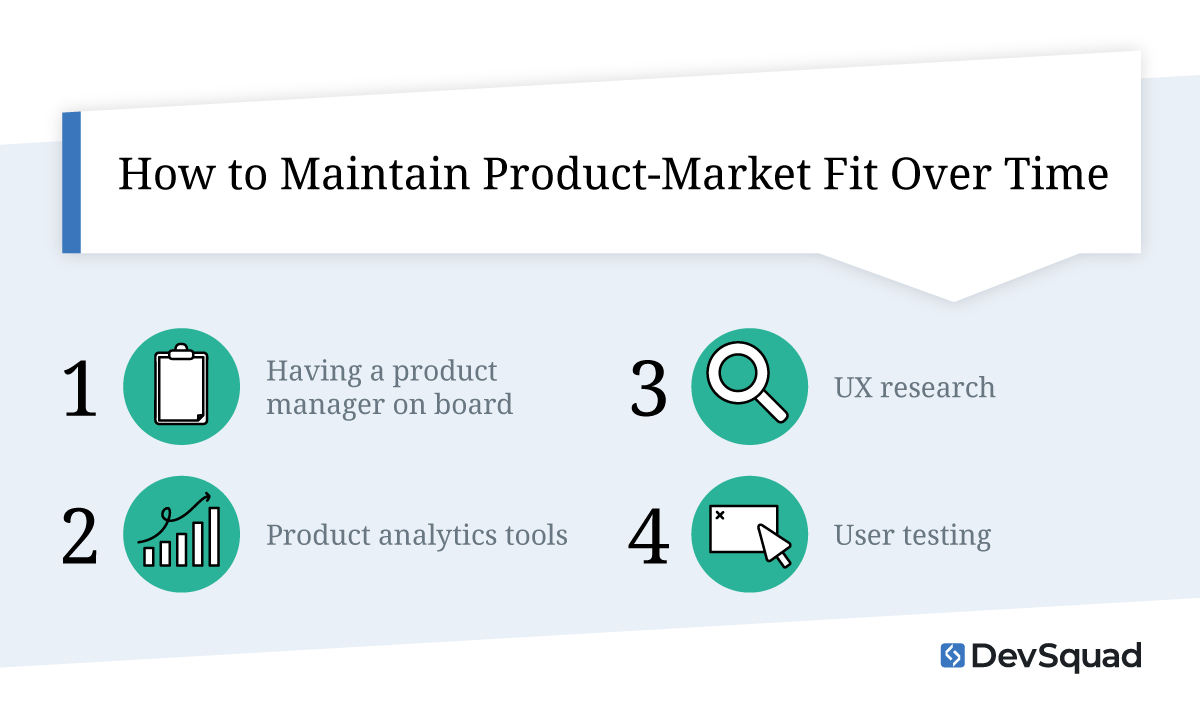
Having a product manager on board
As a CEO of a SaaS company, you need a product manager on board, whether that person is in-house or part of the development agency you’re working with. At DevSquad, we include a product manager for every product we take on.
Product analytics tools
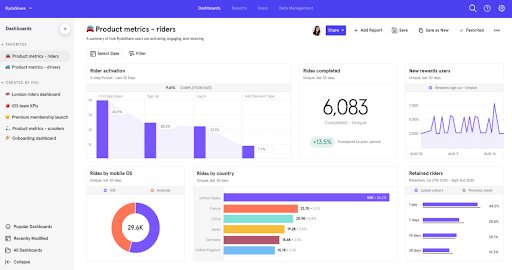
Product analytics software is essential for finding top features, unpopular features, abandoned funnels and workflows, etc. Here at DevSquad, Mixpanel is our personal favorite. Check out this example of a Mixpanel dashboard:
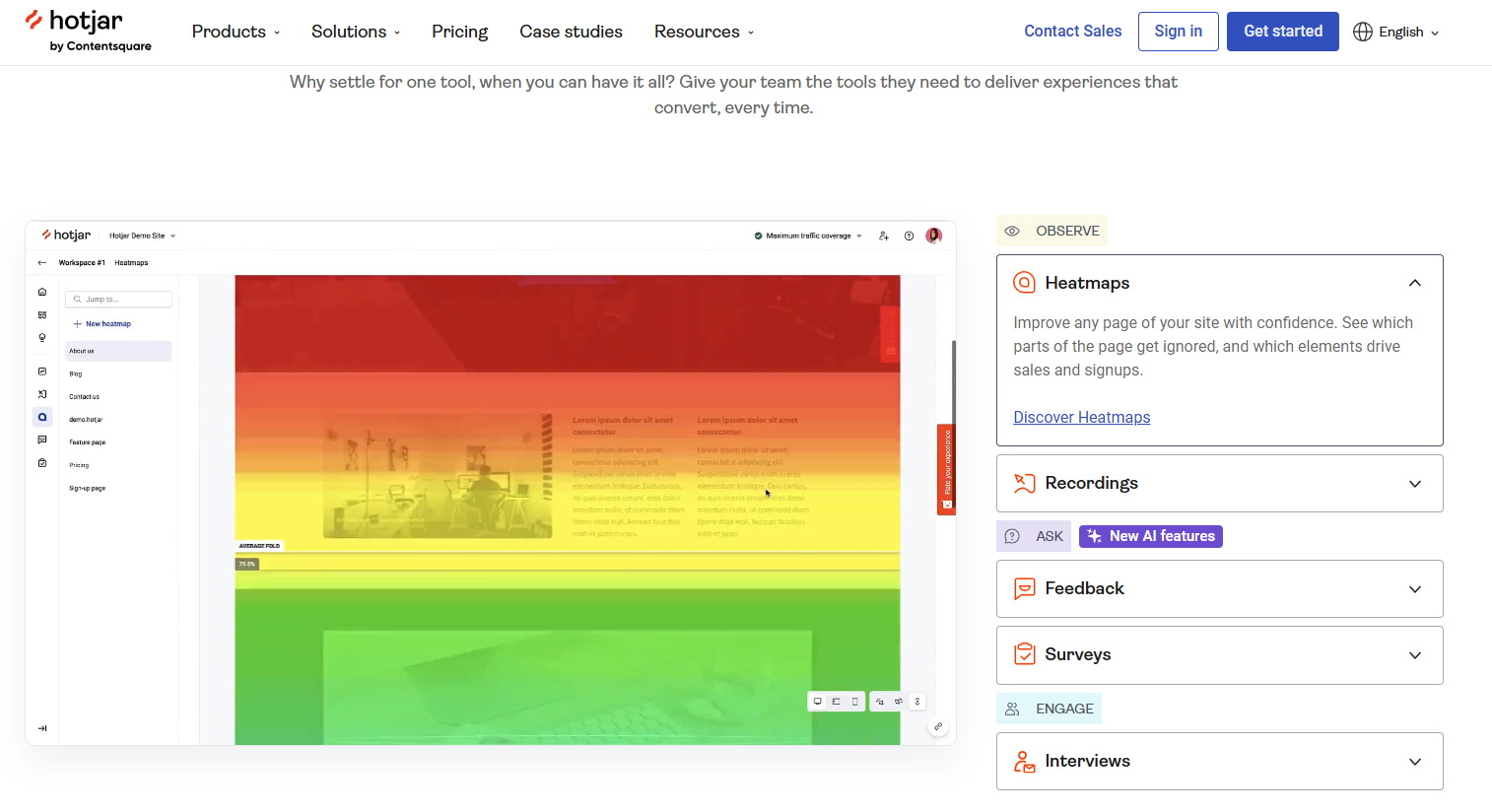
In addition to quantitative tools like Mixpanel, qualitative analytics tools such as Hotjar can reveal exactly how users interact with your product through heatmaps, click tracking, and session recordings. Combining the “what” from Mixpanel with the “why” from Hotjar gives you a more complete picture for measuring product-market fit over time.
To add even more depth consider:
Using cohort analysis to track retention for groups of customers who started using your product in the same time frame. This helps you see whether newer cohorts are adopting and sticking around at higher rates which is a strong signal of improving PMF.
Run churn diagnostics to identify where and why customers leave. Break down churn by customer segment, product usage patterns, and time-to-churn to uncover specific retention challenges.
Data is the best path forward. So use this data to discover how to improve your product.
UX research
A UX researcher will talk with current customers about existing features and ask them what they think. The UX researcher might have the user screenshare as they use the product, or the researcher might just ask the customer questions and listen to their responses. For example, they might ask about an appointment booking feature and discover that the user is confused about how to book appointments for 3 or more people in one meeting. By discovering sources of friction and confusion, the UX researcher can discover room for improvement.
On small teams, product managers handle UX research.
User testing
User testing is also important to vet new possible features and products. Continue to create prototypes and get feedback, especially for features and products that are costly and time-consuming.
Testing new audiences
You’ll also want to make sure that your marketing team and sales team are working together to update your ideal customer profile (ICP). Your marketing team might find a lot of inbound interest from a user segment that sales wasn’t aware of. Meanwhile, sales can offer insights into which user segments are the most ready to buy.
Consider running A/B messaging tests with these new segments to confirm whether your positioning resonates. Use landing pages, email campaigns, or ad copy variations to see which messages drive the strongest response before committing to larger campaigns.
How to test different market segments
How do you find product-market fit when you’ve already built your product? You need to test out different markets.
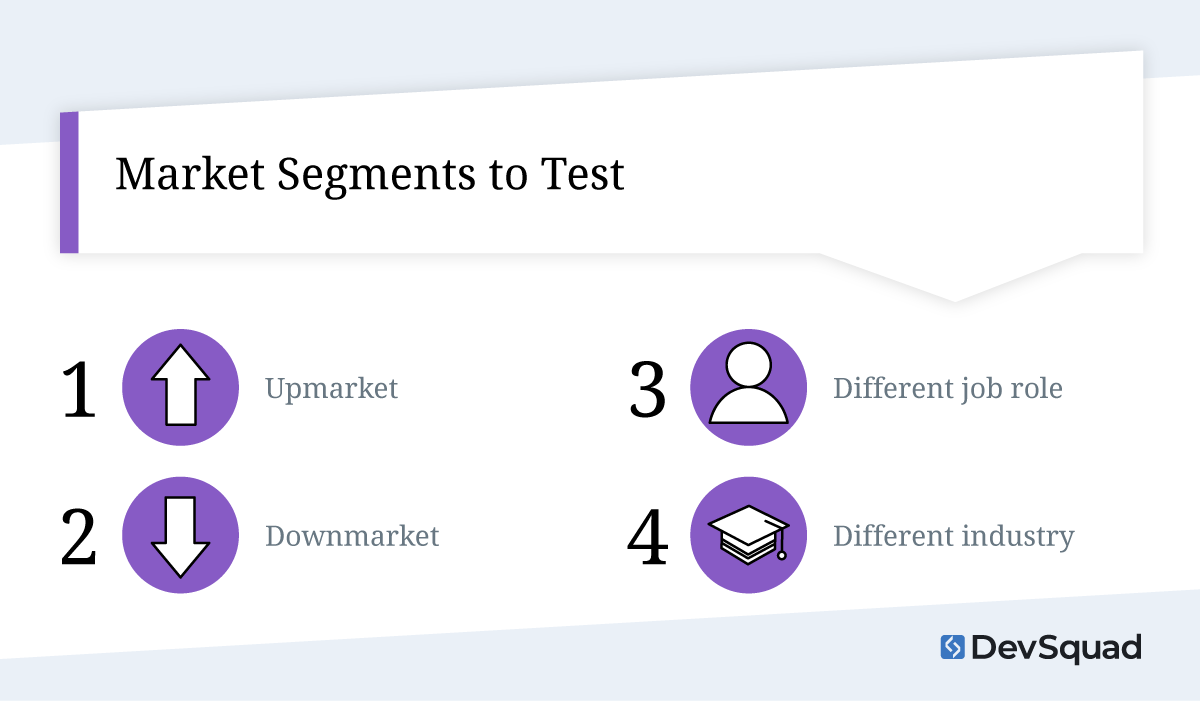
Here are ideas for different segments to try:
Upmarket - Test out your product or prototype with companies that have larger budgets, revenues, and employee headcounts.
Downmarket - Try approaching smaller businesses, particularly if large, complex sales cycles are a concern, or if your product might be better suited to small teams.
Different job role - Test out your product with people in a different job role. For example, if you’ve been contacting accountants and finance managers, try CFOs instead.
Different industry - Maybe a different industry has a greater need for your product, or a greater willingness to pay for it? For example, if you’re creating a productivity tool, other SaaS companies might be your best target audience, as they’re likely to use software to solve productivity problems.
Product-market fit trends and examples
Let’s take a look at some product-market fit success stories. Many viable products have used one of these popular ways of innovating.
Here are different ways that other companies have found product-market fit:
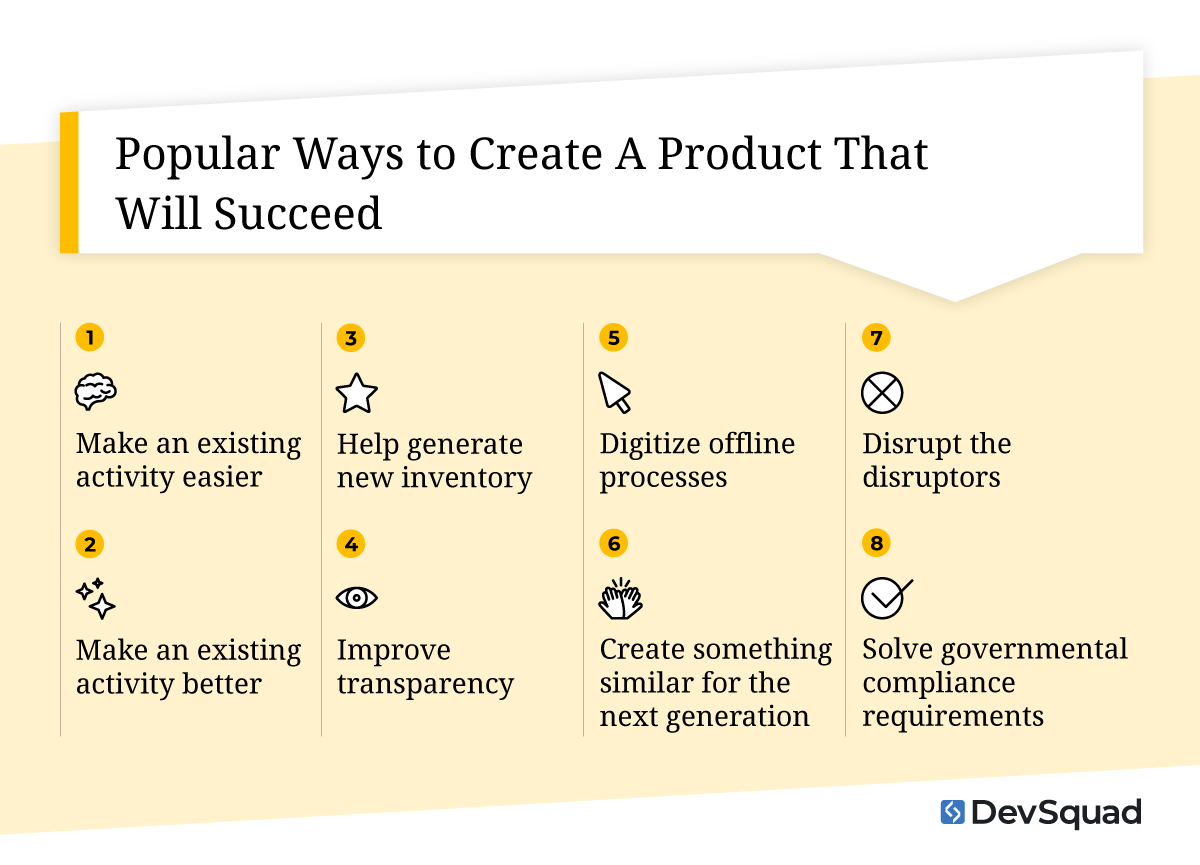
1. Make an existing activity easier
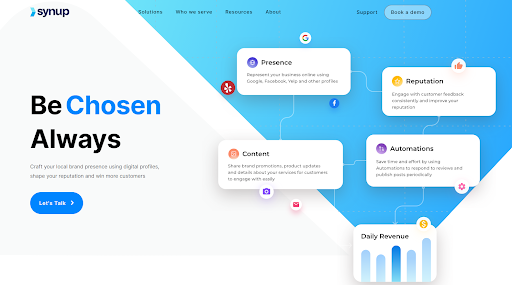
You can make an existing task easier to do. For example, Synup makes it easier for multi-location businesses to manage online profiles and directory listings, while Calendly makes it easier to schedule meetings without back-and-forth emails about availability.

Another example is Superhuman’s simplification of email for professionals. They’ve managed to speed up workflows with keyboard shortcuts, AI-assisted drafting, and priority inbox features. And, their PMF was so solid that they are being acquired by Grammarly.
2. Make an existing activity better

Another way to find product-market is to make life better for your customer base. For example, with TravelPerk, employees can book the travel they want within policy, while finance managers are automatically collecting the data on company spending habits. Gong is another example of this. Salespeople are already doing calls every day—why not track and analyze these calls to provide data-driven coaching? Then there's Figma. They took collaborative design to the next level, outperforming legacy tools like Adobe XD with real-time multi-user editing and seamless browser access.
3. Help generate new inventory

Many popular tech companies have risen to success by helping create new inventory for the market. For example, Upwork has yielded a rise in freelancers and Poshmark helps people sell their old clothes. All of a sudden, things hanging in the closet unused can become inventory to sell. Shopify Collabs is another example where creators can find brands to partner with. This generated new affiliate relationships and influencer marketing opportunities across the Shopify atmosphere.
4. Improve transparency

Transparency is a big value among knowledge workers today. Is there an element or work or business that is still hidden? For example, Terzo is solving the problem of transparency when it comes to managing vendor contracts. Today, vendor managers in big companies don’t often know who originated a contract or why. The platform tracks and reveals information that was previously hidden or hard to find.
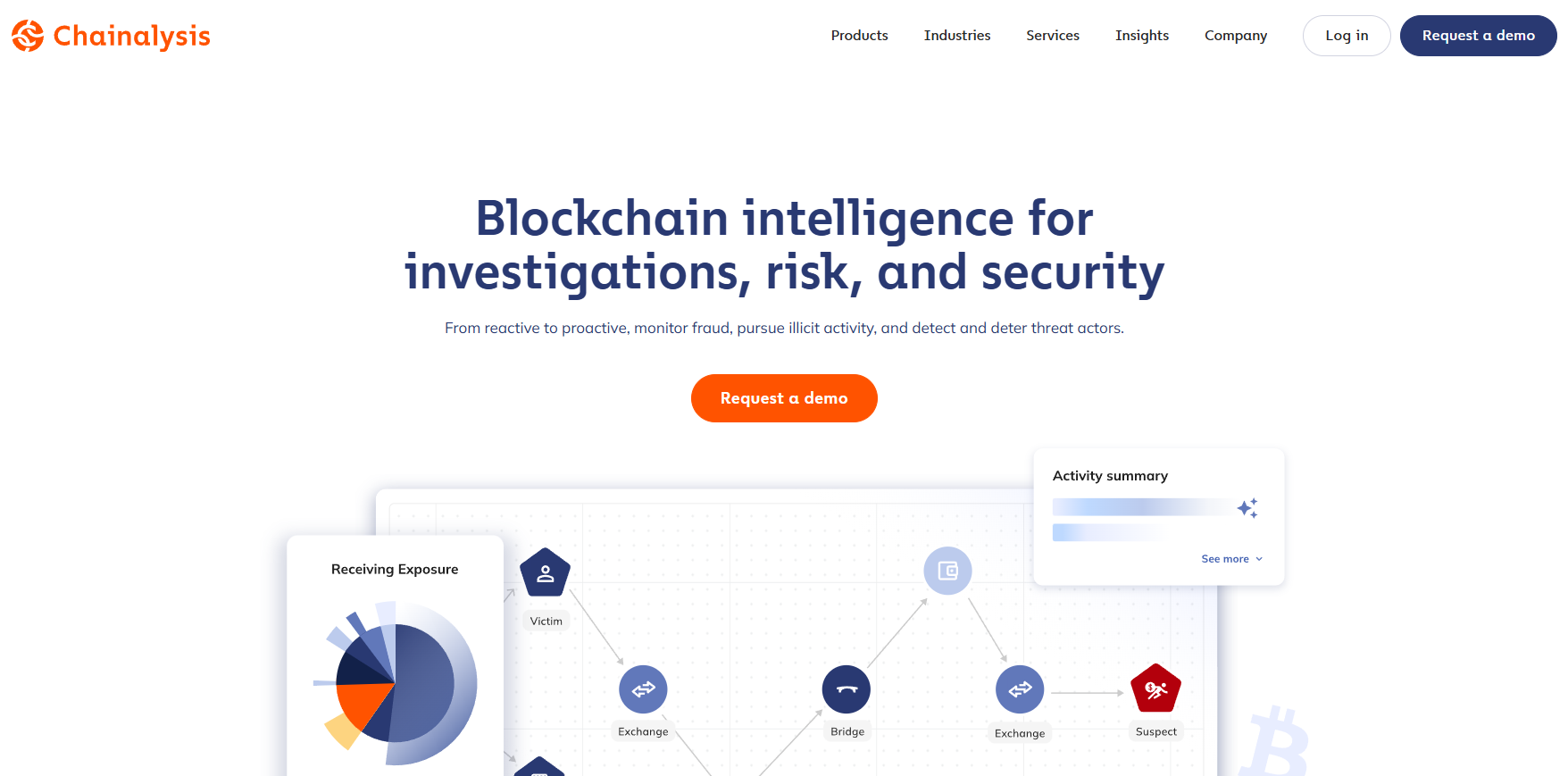
For financial institutions, government agencies, and business in general, Chainalysis developed a platform for tracking blockchain transactions. This transparency helps in fraud prevention and compliance in cryptocurrency flows.
5. Digitize offline processes
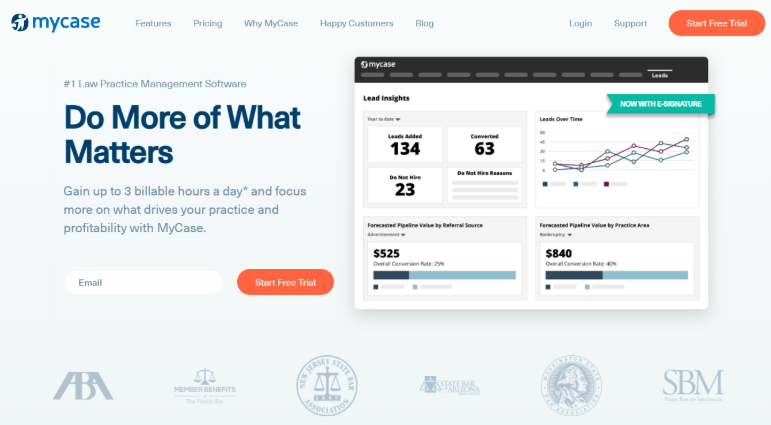
MyCase is a popular SaaS platform for lawyers. It was one of the first to help lawyers digitize their offline processes. It can be used to collect information about a case, structure collaboration workflows, and securely store case documents. For barbers, Squire digitizes barbershop operations with booking, payments, and business management software. A modernization of an industry that previously relied on walk-ins and manual scheduling.
6. Create something similar for the next generation
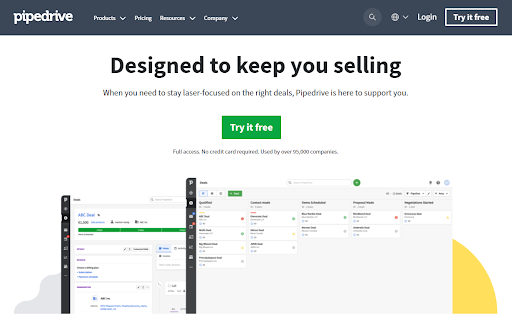
Each generation wants something fresh. It’s why TikTok and Snapchat are more popular than Facebook among Generation Z. And why they like Tinder over Match.com But this phenomenon doesn’t just apply to social media and dating apps. It’s true in the B2B software world too. For example, CRMs have been around for decades, but Pipedrive rose to prominence among millennials because of its attractive and simple UX and more intuitive features. Another case in the B2B sphere is Notion’s replacement of Evernote. They reimagined productivity and note-taking software for a younger, design-conscious audience.
7. Disrupt the disruptors

With Asana and Trello and Basecamp being so popular, who would’ve thought there was still room in the project management space? Enter ClickUp and Monday.com. Both gained rapid market share and notoriety by innovating on top of those early disruptors. They added to the kanban board functionality with improved resource management planning, project visibility, and multi-format collaboration.
8. Solve governmental compliance requirements
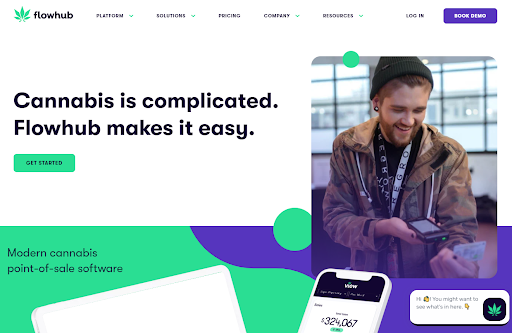
Rules and policies change. With that change, come problems for affected businesses. What compliance nightmares can you help solve? Flowhub helps marijuana dispensaries with its compliance-boosting POS. Meanwhile, SaaS ticketing platform Secutix helps European events companies to collect and scan vaccine passports before an event—as easily as checking in for a flight at home before heading to the airport. Then there is Vanta. Vanta automates security compliance processes for SOC 2, ISO 27001, HIPAA, and more, reducing the time and effort needed for SaaS companies to meet regulatory requirements.
9. Leveraging AI for personalization
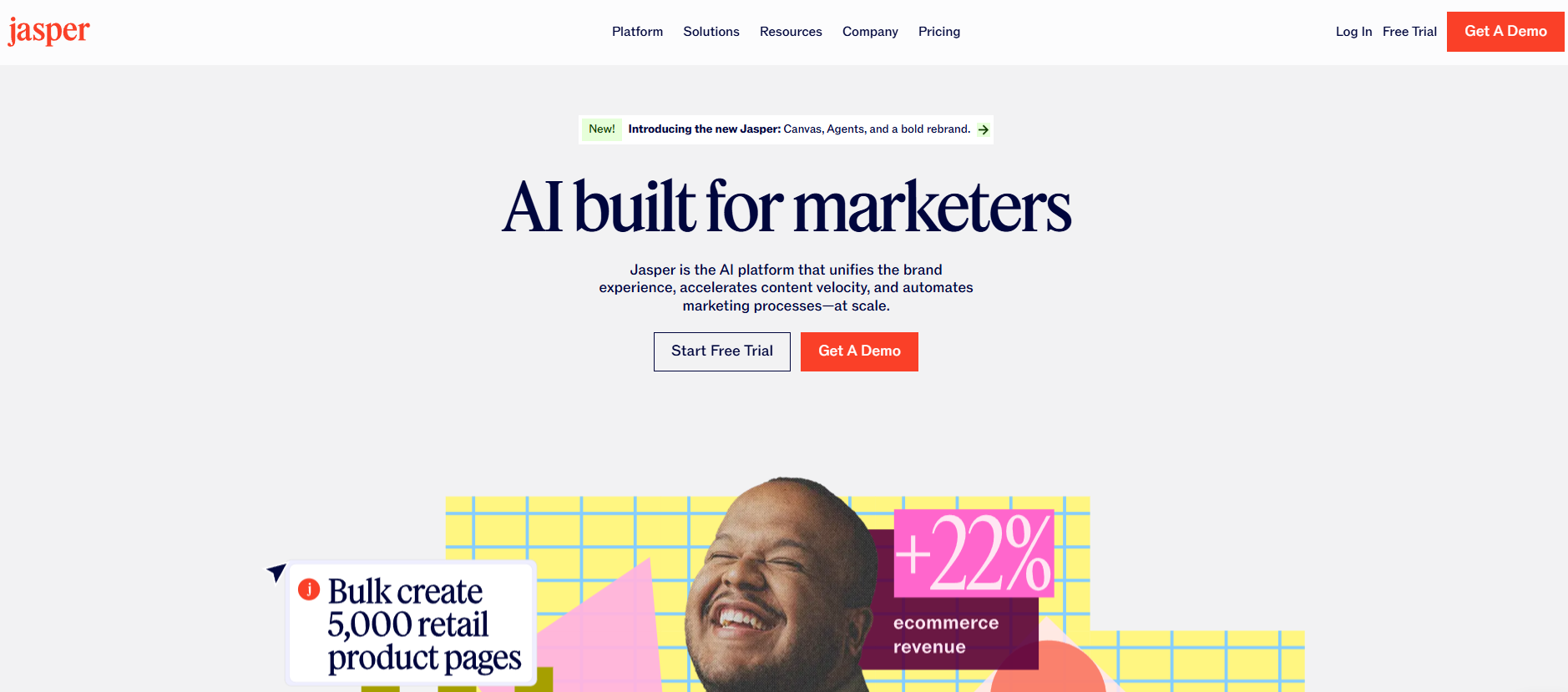
Artificial intelligence has opened the door to personalization at a scale that was impossible just a few years ago. For example, Jasper uses AI to generate marketing copy that’s tailored to specific personas, adjusting tone, style, and messaging for each audience segment. Mutiny helps companies personalize website headlines, CTAs, and on-page experiences dynamically for each visitor without requiring engineering support. And Klaviyo has integrated AI-driven recommendations into B2C CRM platform, enabling brands to send messages based on predicted lifetime value and likelihood to purchase.
Product-market fit quotes
What do product leaders have to say? Here are some of the most insightful quotes.
Product/market fit is to exist within a good market with a product that can satisfy the market itself. - Marc Andreessen, co-founder of the VC firm Andreessen Horowitz
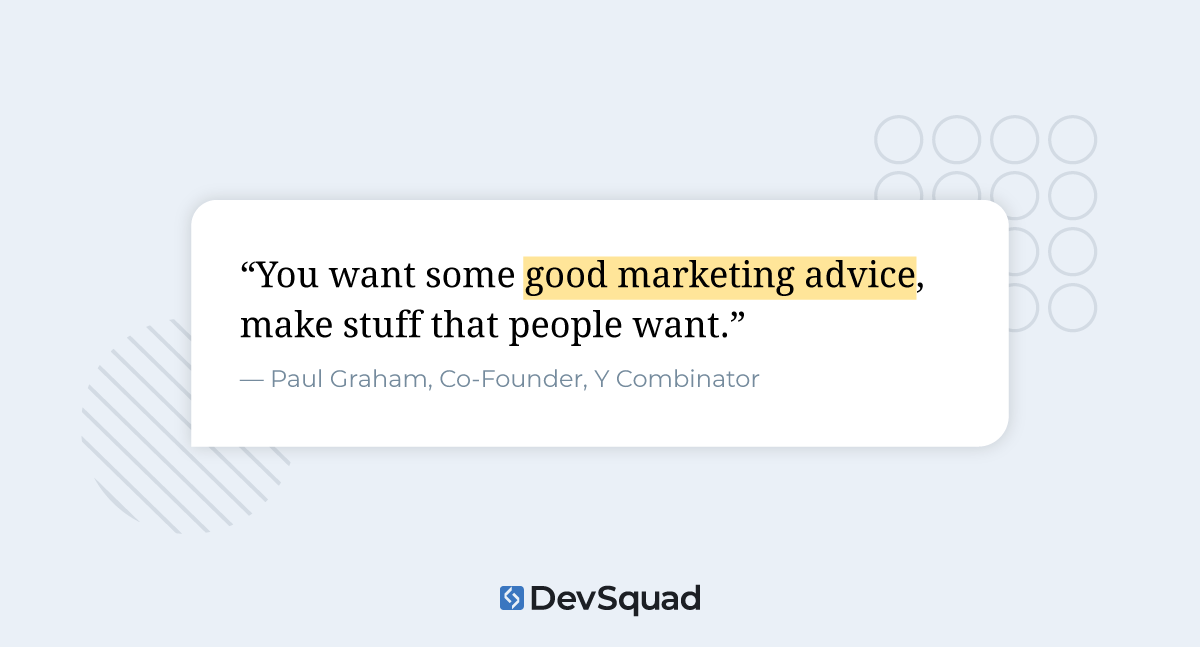
You want some good marketing advice, make stuff that people want. - Paul Graham, co-founder of Y Combinator
Founders are often misled by good acquisition numbers into thinking they’ve found product-market fit. Engagement and retention numbers will tell the real story. - Gigi Levy-Weiss, general partner at NFX
Before product-market fit, your only job that matters is to build a great product. - Sam Altman, former president of Y Combinator and current CEO of OpenAI
If you screw almost everything else up, you can still succeed. How else would you explain the success of a 25 year old running a billion dollar company. If the market demands your product and pulls it out of your hand. - Andy Rachleff, CEO of Wealthfront
Ready to validate, achieve, or maintain product-market fit? Do it with the company that gets product strategy. Learn more about our services.

Dayana Mayfield is a SaaS copywriter and content marketer specializing in SaaS marketing, positioning, and go-to-market strategy. She has consulted for over 195 SaaS companies, focusing on both traffic and conversions. She has been featured in Entrepreneur, Forbes, and Business Insider. Outside of work, Dayana writes SciFi novels and spends her evenings surviving auditions, rehearsals, and tech week as a proud theater mom.